
 South Africa travel advice

Latest updates: Risk level(s) – added map
Last updated: ET
On this page
- Risk level
- Safety and security
- Entry and exit requirements
- Health
- Laws and culture
- Natural disasters and climate
- Need help?
 Risk level
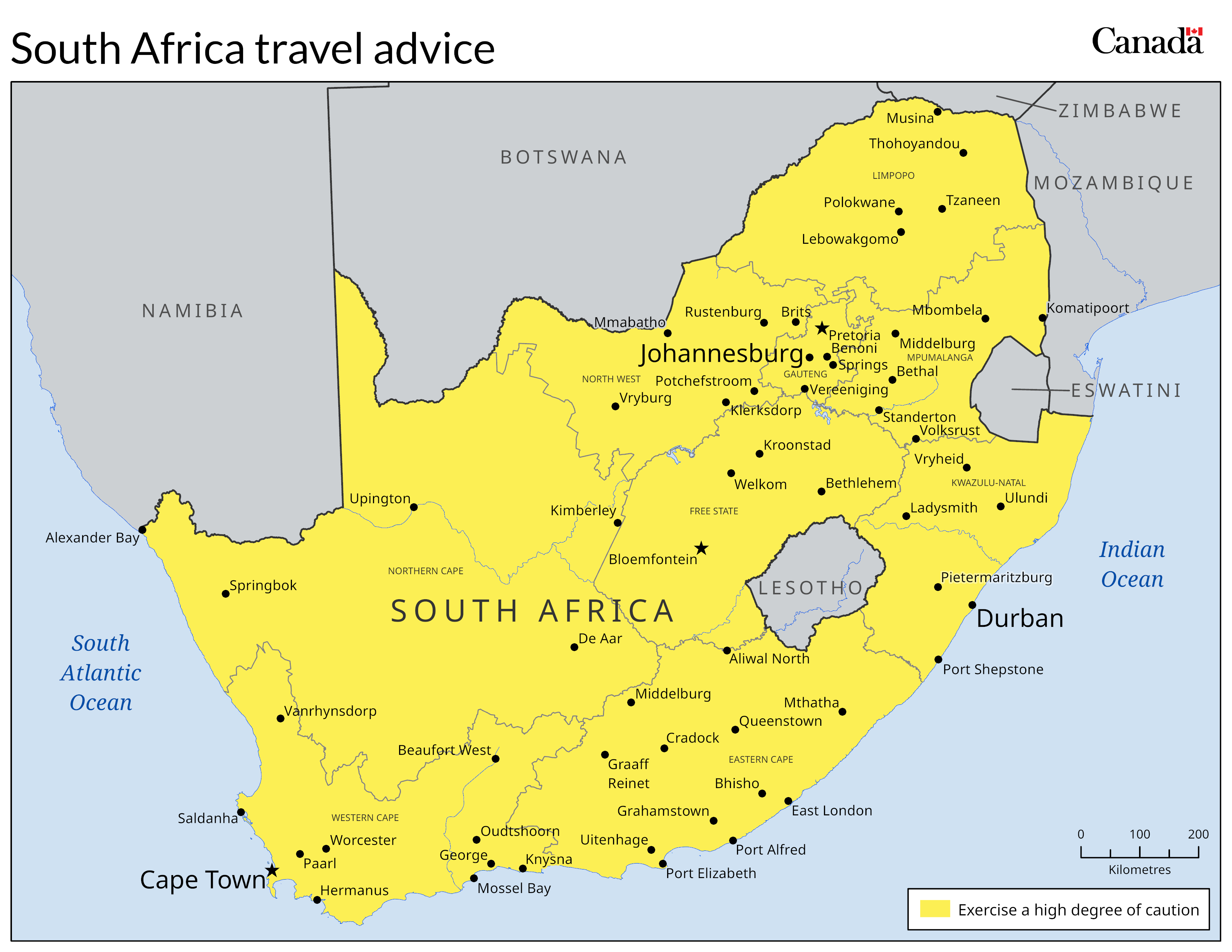
Disclaimer
The features in this map do not constitute an authoritative source of geographical information. This map is solely intended to assist Canadians by illustrating the risk levels contained in the Travel Advice and Advisories for this destination. The features in this map do not necessarily represent the views of the Canadian government on international boundaries, nomenclature or political status. The text under the Risk levels section takes precedence over this map.
South Africa travel advice
Disclaimer
The features in this map do not constitute an authoritative source of geographical information. This map is solely intended to assist Canadians by illustrating the risk levels contained in the Travel Advice and Advisories for this destination. The features in this map do not necessarily represent the views of the Canadian government on international boundaries, nomenclature or political status. The text under the Risk levels section takes precedence over this map.
South Africa - Exercise a high degree of caution
Exercise a high degree of caution in South Africa due to the significant level of serious crime.
 Safety and security
Crime
Violent crime
Violent crimes occur frequently throughout the country and have involved foreigners. Incidents include:
- armed robberies
- burglaries
- home invasions
- carjackings
- assaults, including sexual assaults
- murders
If you are assaulted:
- immediately comply
- avoid making sudden movements
- avoid resisting or antagonizing the assailants
- avoid eye contact with your assailant
Crime significantly increases after dark in major city centres and townships. Avoid city centres after dark.
During your stay:
- stay in accommodations with adequate security measures
- keep doors and windows locked at all times
- keep valuables out of sight and reach
- avoid townships and isolated areas
- don't resist an attack
Petty crime
Petty crime, such as pickpocketing and purse snatching, occurs frequently, particularly in crowded places such as public markets and popular tourist sites.
- Keep your personal belongings, including your passport and other travel documents, in a secure place
- Do not show signs of affluence, wear expensive jewellery or visibly display electronics
- Avoid all unnecessary travel after dark
- Do not leave valuables or bags unattended
- Be extra cautious when withdrawing cash from ATMs or travelling to and from banks
- Be wary of tourist excursions and only sign up with a reputable tour company
- If you believe that you are being followed, go directly to a police station
Theft is common in restaurants and bars.
- Do not leave your bag under the table, or chair or hanging from the backrest
- Keep your bag securely on your lap
Crime in and around airports
Passengers have been followed upon arrival at airports and then robbed either on their way to or once they arrived at their final destination. There are also reports of theft from checked luggage.
When travelling to and from an airport:
- plan to leave or arrive during daylight to reach your destination before nightfall
- stay on highways and main roads; avoid shortcuts
- if you are using a GPS, ensure the route avoids townships and secondary roads
- plan your trip in advance and verify your travel itinerary with a trusted local source
- consider arranging an airport transfer
Some areas surrounding Cape Town International Airport are dangerous with an increased risk of attack on secondary roads near the airport.
When travelling to and from Cape Town International Airport:
- use the M3 and N2 highways rather than the R300
- stay on exit 16 on the N2 highway (Airport Approach Road) instead of taking Borcherds Quarry Road, which leads to the Nyanga township
Crime on the road
Carjackings and armed robberies are common, especially after dark. Criminals often smash car windows at the following vulnerable points to steal valuables:
- traffic lights
- stop signs
- yield signs
- highway off-ramps
Many schemes are used to stop cars, including scattering nails on the road, throwing stones at car windows, or feigning injury.
If you choose to drive in South Africa:
- park in well-lit areas
- choose a vehicle with a robust central locking system, lockable fuel tank cap and vehicle alarm
- avoid driving after dark
- keep windows closed and doors locked at all times
- avoid stopping in isolated areas or to fix a flat tire
- do not stop on the road to offer help to others
- be wary of strangers offering to help you
- verify your travel itinerary with a trusted local source, such as your hotel, your travel agent or local police, before driving
Roadblocks and police officer impersonation
Police roadblocks are common throughout the country. Officers always wear uniforms, and their vehicles are clearly marked with police insignia.
- Be prepared to show your identification
- Follow the instructions of security forces
- Remain calm and courteous
Criminals may pose as police officers and set up illegal roadblocks to extort or rob drivers. Acts of violence have been reported.
Signs of potentially illegal roadblocks include:
- unmarked vehicles
- covered or missing license plates
- roadblocks being set up in unusual locations and at odd hours
If you suspect a roadblock may not be legitimate:
- do not stop your vehicle
- call 10111 and inform the operator of your concerns
- if possible, provide the operator with the registration number of the alleged police vehicle
- turn on your hazard lights and continue to the nearest police station or secure location
Hotel theft
Theft from hotel rooms and guest houses is common.
- Keep doors and windows locked at all times
- Check the level of security at guest houses, hotels, lodges, backpacker lodges or any accommodation before booking
- Don’t leave luggage and valuables unattended; place them in safekeeping facilities
- Don’t open the door to anyone without taking necessary precautions. If someone claims to be a member of staff, verify with the reception prior to opening the door
Kidnapping
Kidnappings for ransom occur frequently and foreign nationals have been kidnapped in the past. In some cases, victims were lured through online dating apps. Criminals have especially targeted 2SLGBTQI+ persons.
Scammers could kidnap you to extort money from your loved ones in exchange for your release.
- Be wary of online romance, as well as commercial and employment proposals
- Always meet new acquaintances in a secure and familiar location
- Know the risk of inviting new acquaintances to your accommodation
- Do not discuss travel plans or any other personal information within earshot of strangers
Express kidnappings
Express kidnappings occur regularly. Victims are kidnapped from the street or a taxi and forced to withdraw cash from an ATM. In some cases, they are held overnight to enable a second withdrawal the next day.
These kidnappings are sometimes committed by taxi or ride-share apps drivers.
Advice for using taxi services or ridesharing applications
Women safety
Women travelling alone may be subject to some forms of harassment and verbal abuse. Violent crimes targeting women, including rape and murder, occur across the country, particularly in urban centres.
- Choose accommodation that provides good security measures
- Be suspicious of recent acquaintances or strangers approaching you, including online
- Do not accept transportation offers from new acquaintances or strangers
Fraud
Credit card, debit card and ATM fraud.
Credit and debit card as well as ATM fraud occurs.
When using your debit or credit card:
- Use ATMs located in well-lit public areas or inside a bank or business
- Don’t accept any offer of help with your transaction
- Pay careful attention when your cards are being handled by others
- Avoid using card readers that have an irregular or unusual feature
- Cover the keypad with one hand when entering your PIN
- Check for any unauthorized transactions on your account statements
Cybersecurity
Cybercrime, malware attacks and online extortion may occur in South Africa.
Cybercriminals can compromise public Wi-Fi networks to steal personal data or credit information.
Romance scams through dating sites and social media have occurred, along with commercial or professional scams.
- Be cautious when posting information or photos on social media
- Use your own USB adaptor or carry an extra battery pack
- Use secure public Wi-Fi networks
- Beware of people who show a keen interest in you online
- Do not give personal or financial account information to anyone
- If you think you've been scammed, do not travel overseas to get your money back
Useful links
Demonstrations
Demonstrations can occur anywhere across the country and sometimes on short notice.
Even peaceful demonstrations can turn violent at any time. They can also lead to disruptions to traffic and public transportation.
- Avoid areas where demonstrations and large gatherings are taking place
- Follow the instructions of local authorities
- Monitor local media for information on ongoing demonstrations
Mass gatherings (large-scale events)
Spiked food and drink
There have been incidents of food or drink being drugged and tourists robbed when unconscious.
Never leave your food or drinks unattended or in the care of strangers. Avoid accepting snacks, beverages, gum or cigarettes from new acquaintances, as these items may contain drugs that could put you at risk of sexual assault and robbery.
Terrorism
There is a threat of terrorism. Terrorist attacks could occur at any time. Individuals who may be inspired by terrorist groups may carry out “lone actor” attacks targeting public places, including where foreigners gather.
Targets could include:
- government buildings, including police stations
- schools, including universities
- places of worship
- airports and other transportation hubs and networks
- public areas such as tourist attractions, restaurants, bars, coffee shops, shopping centres, markets, hotels and other sites frequented by foreigners
- cultural venues
South African authorities have successfully disrupted planned attacks and made arrests related to terrorism offences. Always be aware of your surroundings when in public places.
Regional unrest
Xenophobic attacks, primarily targeting refugees and immigrants from other African nations, can be accompanied by demonstrations, looting and outbreaks of violence. Such unrest could occur in any region of the country and with little warning.
Townships and rural areas
Avoid townships and informal settlements if you are unfamiliar with them, except when travelling with organized tours provided by a reputable company or in association with an experienced local organization.
Wildlife observation
Wild animals can be dangerous, particularly if you are on foot or at close range. Monkeys, especially baboons, may aggressively confront sightseers in search of food, sometimes overwhelming them.
- Always maintain a safe distance when observing wildlife
- Only exit a vehicle when a professional guide or warden says it’s safe to do so
- Only use reputable and professional guides or tour operators
- Closely follow park regulations and wardens’ advice
National parks and nature reserves
Many national parks and nature reserves are in remote areas with limited emergency services. Wild animals often venture within boundaries of camps.
If you decide to visit parks and reserves:
- Follow the advice and warnings of local tour guides and camp employees
- Do not walk around at night
- Never leave children unattended
Reserves and hiking trails
There have been attacks on hikers and tourists at reserves and hiking trails, including Table Mountain, Lions’ Head, Signal Hill, and other tourist attractions and their parking lots.
- Hike in groups and take all appropriate precautions
- Avoid isolated picnic areas and beaches
- Don’t stop at deserted roadside resting places on national roads
Attacks also occurred on certain routes leading Kruger National Park and Addo Elephant Park.
- Avoid the Numbi Gate entrance to the Kruger National Park
- When travelling from Gqeberha (formerly Port Elizabeth) to Addo Elephant National Park, use the N2 via Colchester instead of the R335 via Motherwell
Water activities
Coastal waters can be dangerous, even for experienced swimmers. Not all beaches are supervised. Shark attacks are common on South African shores. Around Cape Town, there is a flag system alerting on the presence of shark activity. Follow the advice and warnings of local authorities.
If you plan to participate in boating activities, such as snorkelling or diving:
- use a reputable company
- ensure that life jackets are available for all passengers
- do not use the equipment if you are unsure of its safety
- consult residents and tour operators for information on possible hazards, the presence of dangerous species and safe swimming areas
- don’t board boats that appear unseaworthy
Liens utiles
- Water safety abroad
- Shark Flag System – Shark Spotters
Outages
Nationwide power shortages or rolling blackouts, referred to as load shedding, can occur at any time. An official schedule of the planned blackouts provides advance notice of the shortages. However, they can also occur with very little notice.
Blackouts can be prolonged as criminals may steal components of the electrical infrastructure.
Blackouts can affect the following services and businesses:
- telecommunications and security systems
- food supply
- businesses
- hotels and other accommodations
- banks and ATMs
- gas stations
- public lighting and traffic lights
Interruptions to water supply occur occasionally and can be lengthy in some areas.
If you’re in South Africa:
- be prepared for extended power outages
- make sure you always have a complete emergency kit on hand, including several flashlights
- always carry a cell phone, power banks, chargers and a list of emergency numbers handy
Useful links
- List of planned blackouts – Eskom, South African electricity public utility
- Get Prepared – basic emergency kit
Telecommunications
Cellular phone reception is generally good in major towns and cities but can be intermittent in rural areas. Extended periods of rolling blackouts are impacting internet connectivity and cell phone networks.
Always carry a cellular phone in the event of an emergency. If using your own phone, ensure that it has international/roaming capability for use while in South Africa.
Roads
Road safety
Fatal road accidents are common in South Africa and often involve pedestrians. Accidents occur especially in wet conditions, as roads can be very slippery. GPS navigation systems may suggest the most direct route but not the safest.
Road conditions
Roads are generally in good condition in and around major cities. They can be poorly maintained and dangerous in remote areas due to:
- potholes
- malfunctioning or insufficient lighting
- pedestrians crossing major highways
- stray animals on the road
- slippery roads during heavy rains
Driving habits
Drivers do not always respect traffic laws, especially at night. Drivers often drive at excess speed and ignore traffic signs. Drinking and driving is common.
Drivers are often aggressive toward pedestrians and fail to yield the right of way even on marked crosswalks.
Travel on foot is inadvisable in most areas. If walking is unavoidable, use only brightly lit, busy streets in popular tourist areas and maintain awareness of your surroundings.
If you choose to drive in South Africa:
- be aware that traffic drives on the left
- always drive defensively
- treat all intersections with malfunctioning traffic lights as a four-way stop
- plan your trip in advance, especially if you are visiting a rural area
- avoid travelling after dark
- use a reliable rental company offering 24-hour emergency service and ensure that you have the contact details for the service
Public transportation
Bus
Avoid using public minibuses. Tourists have been mugged and assaulted both onboard and in bus stations.
Train
The following train services are safe and reliable:
- Gautrain
- Blue train
- Rovos Rail
- Shosholoza Meyl
All other rail services should be avoided due to attacks, theft, poor maintenance and accidents. Johannesburg’s train station and its surrounding area are dangerous due to high crime rates.
Taxis and ridesharing applications
Taxis availability may be limited outside major cities.
- Avoid hailing taxis on the street
- Use only licensed taxis selected by a reputable hotel or restaurant
- Sit in the rear of the vehicle and keep windows closed and doors locked at all times
- Keep valuables out of sight and place bags by your feet
- Never share a taxi with strangers
- Make sure the driver does not pick up other passengers on the way to your destination
- Ask the driver to start the meter or negotiate the fare in advance and have small bills available for payment
Due to ongoing violence between taxi associations and ridesharing drivers, passengers using ridesharing services have been mugged and assaulted in and around taxi stands.
- Avoid rideshare pickups or drop-offs near taxi stands
- Use a trusted ridesharing app
- Confirm the driver’s identity and licence plate before getting in the car
- Do not share your ride with another person
- Use a security feature to share your ride status with a contact
Air travel
We don't make assessments on the compliance of foreign domestic airlines with international safety standards.
 Entry and exit requirements
The authorities of a country or territory decide who can enter or exit through its borders. The Government of Canada cannot intervene on your behalf if you do not meet your destination’s entry or exit requirements.
We have obtained the information on this page from South African authorities. It can, however, change at any time.
Verify this information with the Foreign Representatives in Canada.
Passport
Entry requirements vary depending on the type of passport you're travelling with.
Before you travel, check with your transportation company about passport requirements. Its rules on passport validity may be more stringent than the country's entry rules.
Regular Canadian passport
Your passport must be valid for at least 30 days beyond the date you expect to leave South Africa. Your passport must contain at least 2 empty visa pages for the necessary South African entry stamp and/or visa. Without it, you will be denied entry into the country.
Passport for official travel
Different entry rules may apply.
Passport with “X” gender identifier
While the Government of Canada issues passports with an “X” gender identifier, it cannot guarantee your entry or transit through other countries. You might face entry restrictions in countries that do not recognize the “X” gender identifier. Before you leave, verify this information with the closest foreign representative for your destination.
You should also be aware that current systems used by some countries and travel companies may not recognize the “X” gender identifier. You may still be asked to provide your sex/gender information as either male or female when travelling.
Other travel documents
Different entry rules may apply when travelling with a temporary passport or an emergency travel document. Before you leave, verify this information with the closest foreign representative for your destination.
Useful links
- Travel and your sexual orientation, gender identity, gender expression and sex characteristics
- Foreign Representatives in Canada
- Canadian passports and other travel documents
Visas
Tourist visa: not required for stays up to 90 days
Business visa: not required for stays up to 90 days
Volunteer visa: required
Student visa: required
Employment visa: required
Canadians do not need a tourist visa to enter South Africa. Immigration officials will stamp your passport upon arrival and grant you a specific number of days to stay in South Africa, to a maximum of 90 days. Make sure the duration indicated on your entry stamp matches your travel plans, as permission for a full 90-day stay is not automatically granted.
Information on South African visas – South African Department of Home Affairs
Changing or extending your visa
If you need to change your visa or extend your stay while in South Africa, you must schedule an appointment through VFS Global, the official service provider authorized by the South African Department of Home Affairs.
Overstaying without proper authorization may result in a ban from re-entering South Africa for up to 5 years.
If you leave and re-enter South Africa, even for a short time, you will not automatically be given permission to stay for an additional 90 days. Immigration officials can deny you re-entry into South Africa or grant you a stay of less than 90 days.
Visa platform – VFS Global
Work, volunteer or study
If you intend to work, volunteer or study in South Africa, you must apply for the relevant visas prior to your arrival; otherwise, you risk being refused entry and may be returned to your point of origin.
Other entry requirements
You must be in possession of a return or an onward ticket. Without one, you may be required to deposit the equivalent of a fare home with customs. The money will be refunded after departure from South Africa.
Residence permit
If you reside in South Africa, you must have valid residence permit in your passport each time you enter or exit the country.
Entry and exit requirements for dual citizens
Dual citizens must enter or depart South Africa using their South African passport only.
This requirement applies to individuals who lost their South African citizenship between October 1995 and May 2025 by acquiring another nationality, as the Constitutional Court has ruled that they are now deemed to have retained their South African citizenship.
For further information on dual citizenship, contact the High Commission for the Republic of South Africa in Ottawa or the Consulate General in Toronto.
Children and travel
Unaccompanied minors under the age of 18 traveling to and from South Africa are subject to additional requirements.
All minors holding South African citizenship, including dual citizens, are also subject to additional requirements. Visit the South African Department of Home Affairs website or contact the nearest South African mission, before travelling, to verify the latest requirements.
Useful links
- Entry regulations when travelling with children - South African Department of Home Affairs
- Foreign Representatives in Canada
- Travelling with children
Yellow fever
Learn about potential entry requirements related to yellow fever (vaccines section).
 Health
Relevant Travel Health Notices
- Measles: Advice for travellers - 13 November, 2025
- COVID-19 and International Travel - 12 May, 2025
This section has information and advice about health risks you might face when travelling. Following this advice can help reduce your risk of getting sick. Not all risks are listed here.
It's best to talk to a healthcare provider or visit a travel health clinic preferably 6 weeks before your trip to get personalized health advice. Even if your travel date is coming up soon, it's still worthwhile to make an appointment.
Routine vaccines
Make sure your routine vaccinations are up-to-date before you travel, no matter where you’re going.
These may include vaccines for measles, mumps, and rubella (MMR), diphtheria, tetanus, pertussis (whooping cough), polio, varicella (chickenpox), meningococcal disease, seasonal flu, and others.
Provincial and Territorial Immunization Information
Pre-travel vaccines and medications
When travelling in this destination, you might be at risk for diseases that can be prevented with vaccines or medications. Talk to a travel health care provider about which ones are right for you based on your travel plans.
The highlights below will also tell you if your destination may require that vaccine for entering or exiting.
Yellow Fever - Country Entry Requirements
Yellow fever is a disease caused by a flavivirus from the bite of an infected mosquito.
Travellers get vaccinated either because it is required to enter a country or because it is recommended for their protection.
Risk
- There is no risk of yellow fever in this country.
Country Entry Requirement*
- Proof of vaccination is required if you are coming from or have transited through an airport of a country where yellow fever occurs.
Recommendation
- Vaccination is not recommended.
- Discuss travel plans, activities, and destinations with a health care professional.
- Contact a designated Yellow Fever Vaccination Centre well in advance of your trip to arrange for vaccination.
Yellow Fever Vaccination Centres in Canada
* It is important to note that country entry requirements may not reflect your risk of yellow fever at your destination. It is recommended that you contact the nearest diplomatic or consular office of the destination(s) you will be visiting to verify any additional entry requirements.
Hepatitis A
There is a risk of hepatitis A in this destination. It is a disease of the liver. People can get hepatitis A if they ingest contaminated food or water, eat foods prepared by an infectious person, or if they have close physical contact (such as oral-anal sex) with an infectious person, although casual contact among people does not spread the virus.
Practise safe food and water precautions and wash your hands often. Vaccination is recommended for all travellers to areas where hepatitis A is present.
Measles
Measles is a serious viral infection that spreads easily. It spreads through the air, and can stay in the air for up to 2 hours. You can also get measles by direct contact with an infected person or by touching a surface with the virus on it and then touching your eyes, nose, or mouth before washing your hands.
Getting vaccinated is the best way to protect yourself and others from measles. In Canada, the measles vaccine is part of the routine immunization schedule. If you’re unsure whether you’re protected, talk to a healthcare provider.
Learn more:
Hepatitis B
Hepatitis B is a risk in every destination. It is a viral liver disease that is easily transmitted from one person to another through exposure to blood and body fluids containing the hepatitis B virus. Travellers who may be exposed to blood or other bodily fluids (e.g., through sexual contact, medical treatment, sharing needles, tattooing, acupuncture or occupational exposure) are at higher risk of getting hepatitis B.
Hepatitis B vaccination is recommended for all travellers. Prevent hepatitis B infection by practicing safe sex, only using new and sterile drug equipment, and only getting tattoos and piercings in settings that follow public health regulations and standards.
COVID-19
COVID-19 is an infectious viral disease. Most of the time, it spreads when people are in close contact with others who are infected with the virus. It spreads through respiratory particles, or through an infected surface or object.
Vaccination is one of the most important ways to protect yourself from developing serious complications from COVID-19. Talk to a healthcare provider about the COVID-19 vaccine before travelling. Evidence shows that the COVID-19 vaccines used in Canada are very effective at preventing severe illness, hospitalization and death from COVID-19.
In addition to vaccination, use personal protective measures to help protect yourself and others.
Learn more :
Vaccine for COVID-19: How to get vaccinated
COVID-19: Spread, prevention and risks
Influenza
The best way to protect yourself from seasonal influenza (flu) is to get vaccinated every year. Get the flu shot at least 2 weeks before travelling.
The flu occurs worldwide.
- In the Northern Hemisphere, the flu season usually runs from November to April.
- In the Southern Hemisphere, the flu season usually runs between April and October.
- In the tropics, there is flu activity year round.
The flu vaccine available in one hemisphere may only offer partial protection against the flu in the other hemisphere.
The flu virus spreads from person to person when they cough or sneeze or by touching objects and surfaces that have been contaminated with the virus. Clean your hands often and wear a mask if you have a fever or respiratory symptoms.
Malaria
Malaria is a serious and sometimes fatal disease that is caused by parasites spread through the bites of mosquitoes.
There is a risk of malaria in certain areas and/or during a certain time of year in this destination.
Antimalarial medication may be recommended depending on your itinerary and the time of year you are travelling. Consult a health care professional or visit a travel health clinic before travelling to discuss your options. It is recommended to do this 6 weeks before travel, however, it is still a good idea any time before leaving.
Protect yourself from mosquito bites at all times:
• Cover your skin and use an approved insect repellent on uncovered skin.
• Exclude mosquitoes from your living area with screening and/or closed, well-sealed doors and windows.
• Use insecticide-treated bed nets if mosquitoes cannot be excluded from your living area.
• Wear permethrin-treated clothing.
If you develop symptoms similar to malaria when you are travelling or up to a year after you return home, see a health care professional immediately. Tell them where you have been travelling or living.
Rabies
In this destination, rabies is commonly carried by dogs and some wildlife, including bats. Rabies is a deadly disease that spreads to humans primarily through bites or scratches from an infected animal. While travelling, take precautions, including keeping your distance from animals (including free-roaming dogs), and closely supervising children.
If you are bitten or scratched by a dog or other animal while travelling, immediately wash the wound with soap and clean water and see a health care professional. In this destination, rabies treatment may be limited or may not be available, therefore you may need to return to Canada for treatment.
Before travel, discuss rabies vaccination with a health care professional. It may be recommended for travellers who are at high risk of exposure (e.g., occupational risk such as veterinarians and wildlife workers, children, adventure travellers and spelunkers, and others in close contact with animals).
Safe food and water precautions
Eating or drinking unsafe food or water, or swimming in contaminated water can make you sick while travelling. Take precautions by following these tips:
- Boil it, cook it, peel it, or leave it (only eat food that is prepared safely)
- Avoid, if possible, getting water in your eyes, mouth, or nose when swimming in freshwater (like streams, lakes, or canals), especially after heavy rain or flooding - the water might look clean but can still be contaminated
- Don’t swallow water when bathing, showering, swimming in pools, or using hot tubs
Travellers' diarrhea
Travellers' diarrhea is the most common illness affecting travellers. It is spread from eating or drinking contaminated food or water.
Risk of developing travellers' diarrhea increases when travelling in regions with poor standards of hygiene and sanitation. Practise safe food and water precautions.
The most important treatment for travellers' diarrhea is rehydration (drinking lots of fluids). Carry oral rehydration salts when travelling.
Typhoid
Typhoid is a bacterial infection spread by contaminated food or water. Risk is higher among children, travellers going to rural areas, travellers visiting friends and relatives or those travelling for a long period of time.
Travellers visiting regions with a risk of typhoid, especially those exposed to places with poor sanitation, should speak to a health care professional about vaccination.
Schistosomiasis
There is a risk of schistosomiasis in this destination. Schistosomiasis is a parasitic disease caused by tiny worms (blood flukes) which can be found in freshwater (lakes, rivers, ponds, and wetlands). The worms can break the skin, and their eggs can cause stomach pain, diarrhea, flu-like symptoms, or urinary problems. Schistosomiasis mostly affects underdeveloped and rural communities, particularly agricultural and fishing communities.
Most travellers are at low risk. Travellers should avoid contact with untreated freshwater such as lakes, rivers, and ponds (e.g., swimming, bathing, wading, ingesting). There is no vaccine or medication available to prevent infection.
Tick and insect bite prevention
Many diseases are spread by bites from infected ticks and insects like mosquitoes, fleas, or flies. Before you travel, find out what types of ticks or insects are in the area, when they’re most active, and what diseases they can spread.
To protect yourself from bites:
- use an approved bug spray (insect repellent) on exposed skin
- wear light-coloured, loose clothing made of tightly woven materials like nylon or polyester
- wear socks and closed-toe shoes
- sleep under mosquito netting if you’re outdoors or staying in places that aren’t fully enclosed
- do a full body tick check on yourself, your children, your gear, and any pets you’re travelling with when you return from outdoor activities
Insect bite and pest prevention
Personal insect repellents
Chikungunya
There is a risk of chikungunya in this country. The level of risk may vary by:
- season
- year
- region
- elevation
The virus that causes chikungunya is spread through the bite of an infected mosquito. It can cause fever and pain in the joints. In some cases, the joint pain can be severe and last for months or years.
Protect yourself from mosquito bites at all times.
Insect bite and pest prevention
A vaccine for the prevention of chikungunya is approved in Canada. Talk to your healthcare provider about how best to prevent chikungunya, including the benefits and risks of vaccination based on factors such as your age, itinerary and personal preferences.
Learn more:
Crimean-Congo haemorrhagic fever
Crimean-Congo haemorrhagic fever is a viral disease that can cause fever, pain and bleeding under the skin. In some cases, it can be fatal. It spreads to humans through contact with infected animal blood or tissues, or from the bite of an infected tick. Risk is generally low for most travellers. Celebrations which include the slaughtering of animals and contact with their blood and/ or tissues may increase the risk of exposure to the virus.
Protect yourself from tick bites and wear gloves or other protective clothing if you are in contact with the blood and tissues of animals, particularly livestock. There is no vaccine available for Crimean-Congo haemorrhagic fever.
Rift Valley fever
Rift Valley fever is a viral disease that can cause severe flu-like symptoms. In some cases, it can be fatal. It is spread to humans through contact with infected animal blood or tissues, from the bite of an infected mosquito, or eating or drinking unpasteurized dairy. Risk is generally low for most travellers. Protect yourself from insect bites and avoid animals, particularly livestock, and unpasteurized dairy. There is no vaccine available for Rift Valley fever.
Animal precautions
Some infections can spread directly from animals to people, like rabies or bird flu (avian influenza). Others don’t spread directly from animals but can infect people who visit areas animals have contaminated with their droppings or body fluids.
Certain activities can increase your chances of coming into contact with animals, their droppings, or their body fluids, like:
- travelling in rural or forested areas
- camping, hiking, or visiting caves
- visiting places where live animals are sold or killed for food, like wet markets
To reduce your risk of getting sick:
- avoid contact with animals like stray dogs, livestock (such as pigs and cows), monkeys, snakes, rodents, birds, and bats.
- stay away from places where animal waste can build up, such as caves
- avoid eating undercooked meat
Make sure to closely watch children; they are more likely to try to touch animals.
Person-to-person infections
When travelling, you can reduce your risk of getting or spreading respiratory infections, like the flu or COVID-19, by:
- staying at your accommodation and limiting contact with others if you’re sick
- wearing a well-fitting mask, especially:
- if you’re sick and need to be around others
- when you’re at large indoor events or in crowded settings, like sporting events, concerts, and airports
- cleaning your hands regularly with soap and water for at least 20 seconds, or using hand sanitizer containing at least 60% alcohol
- covering your coughs and sneezes with a tissue or your elbow, not your hands
Mass gatherings (large-scale events)
Clean your hands to help reduce the spread of infectious diseases
Respiratory infectious diseases: How to reduce the spread with personal protective measures
To lower your risk of getting sexually transmissible infections (STIs), HIV, and mpox, you can:
- get vaccinated against mpox if you’re eligible
- practise safer sex methods
- use barrier protection during sexual activity, like condoms and dental dams.
Mpox vaccines
Sexual health and travel
HIV and AIDS: Travel health advice
Tuberculosis
Tuberculosis is an infection caused by bacteria and usually affects the lungs.
For most travellers the risk of tuberculosis is low.
Travellers who may be at high risk while travelling in regions with risk of tuberculosis should discuss pre- and post-travel options with a health care professional.
High-risk travellers include those visiting or working in prisons, refugee camps, homeless shelters, or hospitals, or travellers visiting friends and relatives.
Medical services and facilities
The quality of care varies significantly throughout the country. Good medical care is generally available only in major cities, where private hospitals and clinics are often better staffed and equipped than public or rural facilities.
Private hospitals provide expensive medical care, require proof of insurance, and often request immediate payment.
Emergency services can be slow outside of major cities, and air evacuation may be the only option in the event of a medical emergency in remote areas. Make sure you get travel insurance that includes coverage for medical evacuation and hospital stays.
Make sure you get travel insurance that includes coverage for medical evacuation and hospital stays.
Health and safety outside Canada
Medication
Some prescription medications may not be available in South Africa.
If you take prescription medications, you’re responsible for determining their legality in the country.
- Bring enough medication for your stay
- Always keep your medication in the original container and carry a copy of your prescriptions
- Pack your medication in your carry-on luggage
Keep in Mind...
The decision to travel is the sole responsibility of the traveller. The traveller is also responsible for his or her own personal safety.
Be prepared. Do not expect medical services to be the same as in Canada. Pack a travel health kit, especially if you will be travelling away from major city centres.
 Laws and culture
You must abide by local laws.
Learn about what you should do and how we can help if you are arrested or detained abroad.
Drugs
Penalties for using, importing or exporting drugs are severe and may include lengthy imprisonment.
Dual citizenship
Dual citizenship is legally recognized in South Africa.
If you are a Canadian citizen, but also a citizen of South Africa, our ability to offer you consular services may be limited while you're there. You may also be subject to different entry/exit requirements.
International Child Abduction
The Hague Convention on the Civil Aspects of International Child Abduction is an international treaty. It can help parents with the return of children who have been removed to or retained in certain countries in violation of custody rights. The convention applies between Canada and South Africa.
If your child was wrongfully taken to, or is being held in South Africa, and if the applicable conditions are met, you may apply for the return of your child to the South African court.
If you are in this situation:
- act as quickly as you can
- contact the Central Authority for your province or territory of residence for information on starting an application under The Hague Convention
- consult a lawyer in Canada and in South Africa to explore all the legal options for the return of your child
- report the situation to the nearest Canadian government office abroad or to the Vulnerable Children's Consular Unit at Global Affairs Canada by calling the Emergency Watch and Response Centre
If your child was removed from a country other than Canada, consult a lawyer to determine if The Hague Convention applies.
Be aware that Canadian consular officials cannot interfere in private legal matters or in another country's judicial affairs.
Useful links
- List of Canadian Central Authorities for the Hague Convention
- International Child Abductions: A guide for affected parents
- Children and travel
- The Hague Convention – Hague Conference on Private International Law
- Canadian embassies and consulates by destination
- Request emergency assistance
Driving
While you may drive in South Africa with your valid Canadian driver’s license, it is strongly recommended to obtain an International Driving Permit (IDP) in Canada before your departure, since it cannot be obtained once in South Africa.
Without an IDP, it can be extremely difficult to obtain car insurance for rentals or vehicle purchases. Insurance companies and rental car agencies often require an IDP or South African driver’s license to honour insurance claims, even if such proof was not requested when purchasing the insurance policy.
If your license is in French, it is advisable to obtain a translation into English and carry it with you.
Foreigners driving a rental car across any border into neighboring countries must obtain a permit from the Cross-border Road Transport Agency before reaching the border crossing. Applications can be submitted through most car rental agencies, online or in person at Cross-border Road Transport Agency in Pretoria. Failure to do so may lead to arrest and/or a fine.
Useful links
- Obtain a permit - Cross-border Road Transport Agency
- International Driving Permit
Identification
Local authorities may request to see your identification at any time.
- Always carry certified photocopies of your official identification
- Keep a photocopy of your passport and your entry stamp, visa or travel permit in a safe place in case it’s lost or seized
Money
The currency is the South African rand (ZAR).
Canadian currency can be easily exchanged at major banks and foreign exchange counters. A passport and additional identification are required when undertaking foreign exchange transactions.
Foreigners may enter South Africa carrying up to ZAR 25 000, or USD 10,000 or its equivalent in foreign currencies without declaring it.
Customs requirements for travellers – South African Revenue Service
 Natural disasters and climate
Climate change
Climate change is affecting South Africa. Extreme and unusual weather events are becoming more frequent and may affect your travel plans. Monitor local media for the latest information.
Rainstorms
The climate varies from region to region with storms and flooding possible at different times throughout the year.
In Gauteng and Northwest Provinces, flash storms occur from November to April.
KwaZulu-Natal typically experiences heavy rainfall from October to April. However, flash floods are becoming increasingly frequent outside these periods.
Western Cape typically receives heavy rainfall between May and September.
During periods of heavy rain, dirt roads can become hazardous, especially in rural or mountainous areas. Crossing low-lying river bridges, whether by car or on foot, should be avoided, as there have been fatalities linked to people being swept away by fast-moving waters.
Wildfires
Veld (bush) fires are common during dry seasons. They are very unpredictable and extremely dangerous. They can spread very quickly and travel at speeds of 60 km/h or more due to high winds. Stay clear of active fires and always verify local conditions with relevant authorities before going on bush walks, particularly during the dry seasons.
Drought
The entire territory can be affected by drought, which has become increasingly severe and prolonged in recent years. During periods of prolonged drought, local authorities may impose water use restrictions. You could be fined if you do not comply with these restrictions.
Useful links:
- Weather forecast and alerts – South African Weather Service
- Information on water restrictions – City of Cape Town
- Water restrictions explained – City of Cape Town
 Need help?
Local services
Emergency services
In case of emergency, dial:
- police: 10111 or 10112 from a cellular telephone
- medical assistance: 10177
- firefighters: 10111 or 10112 from a cellular telephone
Consular assistance
Pretoria - High Commission of Canada
South Africa, Lesotho, Madagascar, Mauritius, Namibia
Cape Town - Honorary consul of Canada
For emergency consular assistance, call the High Commission of Canada in South Africa, in Pretoria, and follow the instructions. At any time, you may also contact the Emergency Watch and Response Centre in Ottawa.

Disclaimer
The decision to travel is your choice and you are responsible for your personal safety abroad. We take the safety and security of Canadians abroad very seriously and provide credible and timely information in our Travel Advice to enable you to make well-informed decisions regarding your travel abroad.
The content on this page is provided for information only. While we make every effort to give you correct information, it is provided on an "as is" basis without warranty of any kind, expressed or implied. The Government of Canada does not assume responsibility and will not be liable for any damages in connection to the information provided.
If you need consular assistance while abroad, we will make every effort to help you. However, there may be constraints that will limit the ability of the Government of Canada to provide services.
Learn more about consular services.
Risk Levels
 Take normal security precautions
Take similar precautions to those you would take in Canada.
 Exercise a high degree of caution
There are certain safety and security concerns or the situation could change quickly. Be very cautious at all times, monitor local media and follow the instructions of local authorities.
IMPORTANT:The two levels below are official Government of Canada Travel Advisories and are issued when the safety and security of Canadians travelling or living in the country or region may be at risk.
 Avoid non-essential travel
Your safety and security could be at risk. You should think about your need to travel to this country, territory or region based on family or business requirements, knowledge of or familiarity with the region, and other factors. If you are already there, think about whether you really need to be there. If you do not need to be there, you should think about leaving.
 Avoid all travel
You should not travel to this country, territory or region. Your personal safety and security are at great risk. If you are already there, you should think about leaving if it is safe to do so.
- Date modified: