
 Peru travel advice

Latest updates: Editorial change
Last updated: ET
On this page
- Risk level
- Safety and security
- Entry and exit requirements
- Health
- Laws and culture
- Natural disasters and climate
- Need help?
 Risk level
Disclaimer
The features in this map do not constitute an authoritative source of geographical information. This map is solely intended to assist Canadians by illustrating the risk levels contained in the Travel Advice and Advisories for this destination. The features in this map do not necessarily represent the views of the Canadian government on international boundaries, nomenclature or political status. The text under the Risk levels section takes precedence over this map.
Peru travel advice
Disclaimer
The features in this map do not constitute an authoritative source of geographical information. This map is solely intended to assist Canadians by illustrating the risk levels contained in the Travel Advice and Advisories for this destination. The features in this map do not necessarily represent the views of the Canadian government on international boundaries, nomenclature or political status. The text under the Risk levels section takes precedence over this map.
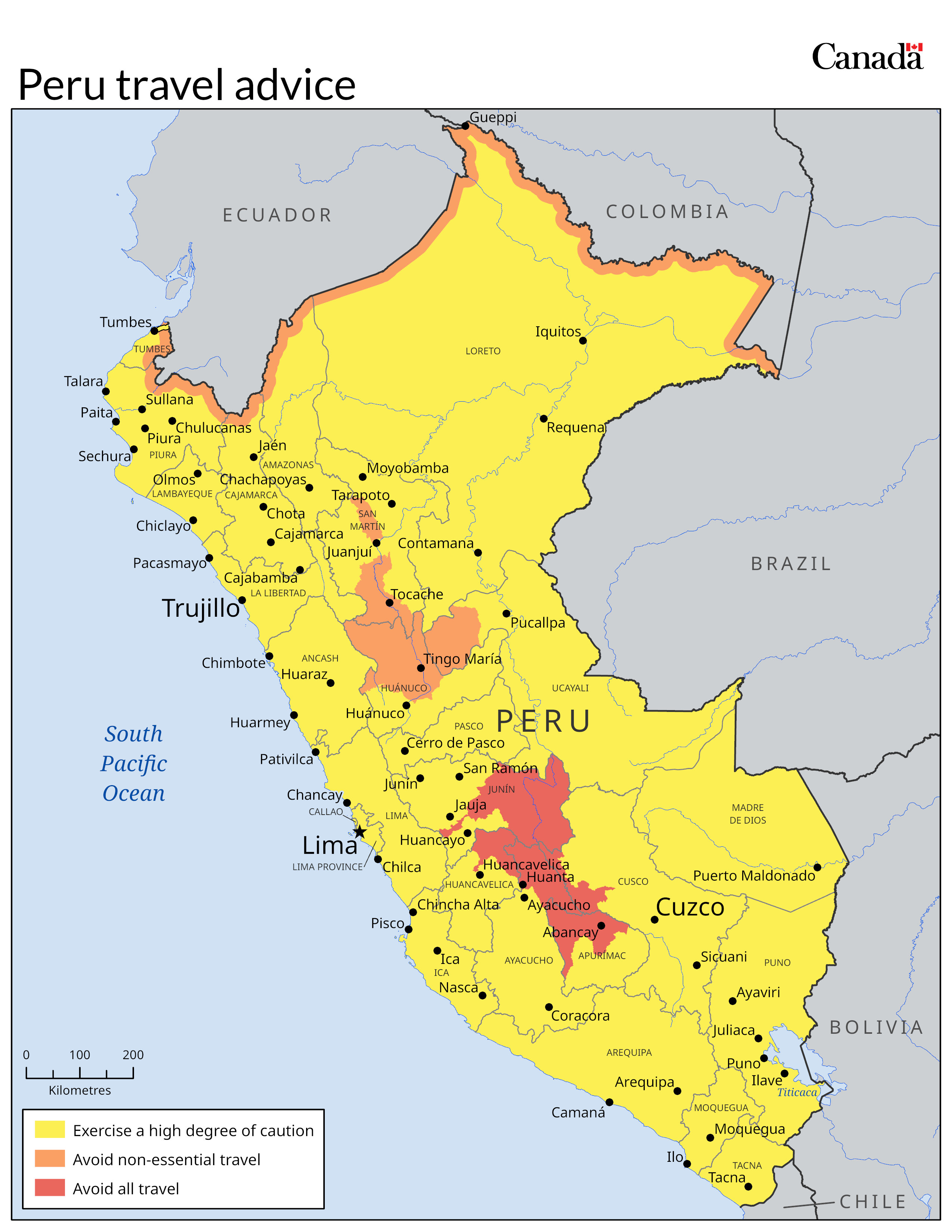
Peru - Exercise a high degree of caution
Exercise a high degree of caution in Peru due to high levels of crime, as well as social conflicts and strikes that may occur across the country.
Valley of the Apurímac, Ene and Mantaro Rivers (VRAEM) - Avoid all travel
Avoid all travel to the Valley of the Apurímac, Ene and Mantaro Rivers (VRAEM) and surroundings due to the risk of terrorism, drug trafficking and associated crime, and limited law enforcement presence.
This area consists of:
- in the Department of Apurímac:
- Province of Abancay
- Province of Andahuaylas
- Province of Chincheros
- in the Department of Ayacucho:
- Province of Huanta
- Province of La Mar
- in the Province of Convención in the Department of Cusco:
- District of Pichari
- District of Quimbiri
- District of Vilcabamba
- in the Department of Huancavelica:
- Province of Churcampa
- Province of Tayacaja
- in the Department of Junin:
- Province of Conceptión
- Province of Satipo
Upper Huallaga River Valley - Avoid non-essential travel
Avoid non-essential travel to the Upper Huallaga River Valley and surroundings due to instances of domestic terrorism and criminal activity such as drug trafficking, robberies, kidnappings, extortion and raids.
This area consists of:
- in the department of Huánuco:
- District of Marias in the Province of Dos de Mayo
- Province of Huacaybamba
- Province of Humalíes
- District of Chinchao and District of Churubamba in the Province of Huánuco
- Province of Leoncio Prado
- Province of Marañón
- in the department of San Martín:
- Province of Huallaga
- District of Campanilla in the Province of Mariscal Caceres
- Province of Tocache
- in the department of Ucayali:
- Province of Padre Abad
Border area with Colombia - Avoid non-essential travel
Avoid non-essential travel to areas within 20 km of the border with Colombia due to gang-related violence and organized crime linked to drug trafficking and illegal mining.
Border area with Ecuador - Avoid non-essential travel
Avoid non-essential travel to areas within 20 km of the border with Ecuador, except for Tumbes border crossing and the Panamerican Highway, due to the presence of landmines and unmarked minefields.
 Safety and security
State of emergency
A state of emergency is in effect in the provinces of Lima and Callao to curb a rise in violent crime.
The Peruvian government frequently declares regional states of emergency and publishes the information in El Peruano. A state of emergency allows the military to assist police forces to respond to security incidents and natural disasters. When a state of emergency is in effect, security forces have increased rights to:
- restrict freedom of movement
- monitor correspondence
- conduct search and seizures
- detain persons of interest
If you are in Peru during a state of emergency:
- monitor local media for the latest information
- follow the instructions of local authorities
- avoid crowds
Useful links
- El Peruano – Official newspaper (in Spanish only)
- Official tourist information – Tourist Information and Assistance
Valley of the Apurímac, Ene and Mantaro rivers (VRAEM)
Drug trafficking
Cocaine production and trafficking occurs in VRAEM. Travel is particularly dangerous in areas where there is coca cultivation and processing.
Domestic terrorism
Incidents of domestic terrorism have occurred in VRAEM, particularly the region where the Apurímac, Ayacucho, Cuzco and Junín departments meet. Although tourists are rarely involved, you could be in the wrong place at the wrong time.
Border area with Colombia
Criminal activity related to drug production and trafficking, illegal mining and the presence of armed groups near the border, particularly along the Putumayo River, pose a threat to personal security.
Border area with Ecuador
Expect an increased security presence in the border area due to crime, particularly theft and extortion. Landmines and unmarked minefields are also present along the border.
Only cross the Peru–Ecuador border at the official crossing point near Tumbes, the Centro Binacional de Atención Fronteriza (Binational Border Centre). Access this border crossing via the Pan-American Highway. This is the only land border crossing with Ecuador that is currently open.
Be aware that basic services in the Tumbes district have become increasingly difficult to access due to an increased number of migrants entering Peru from Ecuador.
Province of Lima
There has recently been a marked increase in violent crime in the Province of Lima, including in the city of Lima. Theft is very common, and thieves may be armed with guns.
Crime
Crime rates are high throughout the country.
- Always be aware of your surroundings, especially at night
- Avoid walking in deserted or under-populated areas
- Travel in groups whenever possible
Petty crime
Petty crime, such as pickpocketing and bag snatching, occurs frequently, particularly in:
- Arequipa
- Cusco
- Lima
- Puno
Theft occurs frequently, particularly in crowded public areas such as:
- buses, trains, bus and train stations, and airports
- hotel lobbies
- restaurants
During your trip:
- keep your personal belongings, including your passport and other travel documents, in a secure place
- don’t show signs of affluence or wear expensive jewellery
- avoid using your phone at the roadside or in a vehicle with the windows open, as motorists may snatch it
- never leave bags unattended
Pickpockets and bag snatchers may work in pairs or groups and employ a variety of ruses to divert their victim’s attention. A common scam involves spraying a substance on victims and then robbing them while pretending to help clean the stain, or distracting the victim by asking questions while another person perpetrates the theft. In some cases, thieves on motorcycles will snatch purses, backpacks or cellular phones.
Violent crime
Violent crime occurs. Incidents have included:
- armed robberies
- assaults, including sexual assaults
- carjackings
- kidnappings
- extortion
Armed robbery
Armed robberies are on the rise. While most victims are not physically injured, criminals will not hesitate to use force when opposed.
Armed robberies occur, including in tourist areas, particularly when travellers walk alone.
- Don’t show signs of affluence or wear expensive jewellery
- If you are robbed, hand over your cash, electronic devices and valuables without resistance
- Be extra cautious when withdrawing cash from ATMs and use ATMs inside banks and during regular service hours
- Don’t resist an attack
Sexual assault
Incidents of sexual assault, including rape, occur throughout the country. In some cases, tour guides have been implicated.
- Do not travel alone, especially after dark
- Remain particularly vigilant at bus terminals and in taxis
- Be careful when dealing with strangers or recent acquaintances, especially regarding the acceptance of rides or other invitations
If you are a victim of sexual assault, you should be report it to the police immediately. Medical examinations at identified clinics are part of the investigation process. Those who delay reporting may experience more scrutiny by local authorities.
Assault
Assaults have occurred along the Inca Trail and in the Huaraz region of the Cordillera Blanca mountains. Hiking in these regions should be done in groups.
Kidnapping
Express kidnappings involving tourists have occurred. Victims are usually abducted for a few hours and forced to withdraw money from ATMs for their release. Most express kidnappings take place at night, but incidents also occur during daylight hours. Incidents often involve criminals posing as taxi drivers, or taxi drivers working for organized gangs.
Virtual kidnappings occur throughout the country. Criminals use stolen cellphones to contact family members claiming to have kidnapped the owner of the phone and then ask for ransom money.
- Be suspicious of strangers approaching you on the street
- Never leave your cellphone unattended
- Be cautious when using cellphones and smart devices in public as they are often targeted by thieves, especially while people are using them
- Ensure your phone is password protected
Demonstrations
Demonstrations occur frequently, often with little to no notice. Roadblocks are frequently erected during demonstrations, which can complicate travel plans. Even peaceful demonstrations can turn violent at any time. Police have used tear gas and other methods to disperse crowds. Authorities often declare a state of emergency in response to demonstrations. Protestors may also block rivers essential for transportation in some remote regions, including the Manu River area of Madre de Dios Department and Iquitos region. This may result in tourists being temporarily stranded.
Peruvian law prohibits political activities by foreigners. You may face detention or deportation if you take part in a demonstration.
- Avoid areas where demonstrations and large gatherings are taking place
- Follow the instructions of local authorities
- Monitor local media for information on ongoing demonstrations
Mass gatherings (large-scale events)
Strikes
Strikes occur frequently, often with little or no notice, and expand quickly from one region to another. Strikes can complicate travel and disrupt public transport and services, including your ability to travel to or leave isolated tourist destinations such as Machu Picchu. They could also lead to border closures, including with Bolivia.
Organized crime
Organized crime and violence associated with it has increased throughout the country. In some parts of the country, military and security forces are deployed to assist police in combatting organized crime.
Domestic terrorism
Incidents of domestic terrorism occur, particularly in remote jungle areas, such as:
- parts of the Huancavelica and Ucayali departments
- the Upper Huallaga River Valley in the Huánuco and San Martín departments
Incidents have included:
- raids
- temporary ambushes of small villages
- bombings or threats of violence against local security forces or community figures
Overland travel in these regions is unsafe.
Fraud
Counterfeit currency
Counterfeit currency in both sol and U.S. dollars is a growing and serious problem. Counterfeit bills are widely distributed, including by banks, casinos and local stores.
Avoid moneychangers on the street, as they may carry counterfeit currency or work with pickpockets.
Credit card fraud
Credit card and ATM fraud occurs. Be cautious when using debit or credit cards:
- pay careful attention when others are handling your cards
- use ATMs located in well-lit public areas or inside a bank or business
- avoid using card readers with an irregular or unusual feature
- cover the keypad with one hand when entering your PIN
- check for any unauthorized transactions on your account statements
Scams
Criminals posing as taxi drivers often rob tourists along the route to and from Peru’s main airports, including Lima’s Jorge Chávez International Airport, and at bus terminals.
- Only use authorized cabs located inside airport terminals and bus stations
- Only use reputable cab companies or ride-sharing apps
- Avoid hailing taxis on the street
Thieves also pose as police officers to gain the confidence and cooperation of their potential victims.
- If you are stopped by local authorities, ask to see official identification and record the officer’s name, badge number and district
- For traffic violations, request that the officer issue you a fine in writing, which is payable at a later date
- You should also note the location of the arrest
Legitimate police officers have also extorted money in exchange for dismissing minor offences or traffic violations. They have also stolen money and valuables during searches. If you are searched, even at the airport, ensure you have all your belongings before leaving.
Scammers may pose as volunteer organizations or owners of rental properties.
- If you are planning to participate in volunteer activities in Peru, ensure that the company organizing your trip is legitimate
- When booking accommodations, use reputable platforms and companies
Useful links
Spiked food and drinks
Snacks, beverages, gum and cigarettes may contain drugs, including incapacitating drugs such as Rohypnol and Scopolamine, that could put you at risk of sexual assault and robbery.
- Be wary of accepting these items from new acquaintances
- Never leave food or drinks unattended or in the care of strangers
Harassment
Women travelling alone may be subject to some forms of harassment or verbal abuse.
Homosexuality is not widely accepted in Peruvian society. 2SLGBTQI+ travellers could be discriminated against based on their sexual orientation, gender identity, gender expression or sex characteristics. Avoid public displays of affection.
Useful links
- Advice for women travellers
- Travel and your sexual orientation, gender identity, gender expression and sex characteristics
Telecommunications
In remote areas, the telecommunications network is not always reliable and Internet access may be limited.
Adventure travel
Outdoor activities can be dangerous if unprepared. Each year, hikers and climbers are victims of serious, sometimes fatal, accidents in the Andes. Trails may be steep, slippery, poorly marked and maintained. Some hikers have become lost on trails around Machu Picchu in the Cusco Region and Huaraz in the Ancash region. Tour operators may not meet Canadian safety standards.
Access to Vinicunca, the “Rainbow Mountain”, is regularly disrupted by violent disputes between communities located around routes in the Cusipata and Pitumarca districts. If you plan to visit Vinicunca, consult your tour operator to confirm that the area is secure and that access is open.
- Stay on marked trails and consider hiring a registered guide from a reputable company
- Know the symptoms of high-altitude illnesses, dehydration and heatstroke, which can be fatal
- Share your itinerary with a friend or family member if hiking alone
- Obtain detailed information on your activity and on the environment in which you will be setting out
- Buy travel insurance that covers incidents related to this type of recreational activity
- Monitor weather conditions and other possible hazards
- Ensure that you have proper equipment and bring sufficient water
Useful links
- Adventure travel health and safety
- Official tourism information – Tourist Information and Assistance
- Official Travel Agencies – Peruvian Association of Travel and Tourist Agencies (Spanish only)
- Responsible tourism – Peruvian Association of Adventure tourism, Ecotourism, and Specialized tourism (Spanish only)
- Qualified Tourist Services – Ministry of foreign trade and tourism (Spanish only)
Sand buggies
There are reports of accidents, severe injuries and deaths involving recreational sand buggies, particularly in the sand dunes around Ica and Lake Huacachina. These vehicles are not regulated, often poorly maintained, and safety equipment is not always available.
Water activities
There have been several recent white-water rafting accidents and drownings involving tourists, particularly on the Urubamba River near Cusco. Companies offering white-water rafting, their guides and their equipment may not be held to the same standards as similar companies in Canada. Rescue services may not be consistent with international standards.
Coastal waters can be dangerous. Strong currents exist in the Pacific Ocean and in rivers. Lifeguards are not always present or properly trained at beaches.
Swimming in jungle lakes and rivers can be dangerous due to the presence of parasites and wildlife.
Seek advice and consult residents and local authorities about conditions before swimming, surfing or participating in other aquatic activities.
Ayahuasca ceremonies
Spiritual cleansing and ayahuasca ceremonies, offered by shamans and other individuals, involve consuming substances that can cause medical complications and severely impair cognitive and physical abilities. Exposure to these substances has led to serious illness, injury, assault and even the death of several tourists.
Ceremonies often take place in remote areas with no access to medical or mental health facilities or resources and limited communication with local authorities. Most of the time, the facilities lack basic first aid or emergency plans for those suffering from physical or psychological illness from these ceremonies. Ayahuasca ceremonies are not regulated and there is no way to assess the safety of any of the services, operators or shamans.
Avoid participating in spiritual cleansing or ayahuasca ceremonies.
Roads
Mountainous roads can be dangerous, especially at night. Accidents causing fatalities are common.
Police checks can cause traffic delays.
When renting a vehicle, always purchase insurance. Most drivers in Peru have only the minimum required car insurance, which may not adequately cover accidents.
Vehicles are a target for robbery. Criminals have different tactics, including throwing objects in front of oncoming traffic in the hope that cars will stop or dispersing nails on the road to puncture tires and force people to stop. If this occurs and you need to stop, do so only in a safe location, such as a gas station.
- While travelling by car, keep your doors locked and windows shut at all times
- Keep your personal belongings in the trunk of the vehicle, as criminals have been known to shatter windows to “smash and grab” and to attempt entry when they see travel bags or merchandise
- Follow the main roads used by bus tour companies
- Avoid travelling by road outside of major cities after dark, when there is a higher risk of robbery
State of the roads in Peru in real time – Government of Peru (Spanish only)
Road conditions
Road conditions vary throughout the country.
Driving can also be dangerous due to:
- bad road markings and signage
- lack of guardrails
- narrow, winding and mountainous roads
Driving habits
Some drivers and motorcyclists can be aggressive and reckless and do not always respect traffic laws.
Amazon River
Thieves, often armed, have targeted tourists travelling by boat along the Amazon River. If you are visiting the Amazon River, only use a reputable tour operator.
Live piracy report – International Maritime Bureau
Public transportation
Buses and minibuses operate between most major cities. Demonstrations and strikes can lead to disruptions to traffic and public transportation.
Buses and coaches
Many local buses in Lima are old, poorly maintained and overcrowded. Drivers of these vehicles tend to dominate the roads and disregard other drivers or pedestrians.
Intercity bus travel can be dangerous due to the risk of bus accidents, which are usually caused by excessive speed, poor vehicle maintenance and driver fatigue. Armed gangs have been known to stop buses to rob travellers, especially at night. Incidents of assaults on buses have also been reported.
The Government of Peru publishes a list of the bus companies with the highest rates of involvement in fatal or serious injury traffic accidents.
- Only use reputable transportation companies
- Avoid taking buses and coaches at night
- Always keep your personal belongings and identification on you for long-distance travel
- Avoid storing bags under or above your seat and on empty seats
Ministry of Transportation – Government of Peru (iSpanish only)
Trains
Trains operate between Arequipa-Cusco-Puno and between Cusco-Ollantaytambo-Machu Picchu. Demonstrations, strikes and derailments can disrupt travel by train, including trains to or from Machu Picchu.
Useful links
- Train Services – Peru rail
- Train Services – Inca rail
Taxis
Licensed taxis are not metered. Taxi drivers sometimes do not provide change or will continue to drive until they can obtain change.
- Avoid hailing taxis on the street
- Use official taxi compagnies located inside airports’ terminals or bus stations
- Only use reputable taxi companies through establishments such as hotels or ride-sharing apps
- Confirm the fare in advance
- Don’t pay until you have reached your destination
- Try to carry the exact fare
Air travel
We don't make assessments on the compliance of foreign domestic airlines with international safety standards.
 Entry and exit requirements
The authorities of a country or territory decide who can enter or exit through its borders. The Government of Canada cannot intervene on your behalf if you do not meet your destination’s entry or exit requirements.
We have obtained the information on this page from the Peruvian authorities. It can, however, change at any time.
Verify this information with the Foreign Representatives in Canada.
Passport
Entry requirements vary depending on the type of passport you're travelling with.
Before you travel, check with your transportation company about passport requirements. Its rules on passport validity may be more stringent than the country's entry rules.
Regular Canadian passport
Your passport must be valid for at least 6 months after the date of your arrival in Peru.
Passport for official travel
Different entry rules may apply.
Passport with “X” gender identifier
While the Government of Canada issues passports with an “X” gender identifier, it cannot guarantee your entry or transit through other countries. You might face entry restrictions in countries that do not recognize the “X” gender identifier. Before you leave, verify this information with the closest foreign representative for your destination.
You should also be aware that current systems used by some countries and travel companies may not recognize the “X” gender identifier. You may still be asked to provide your sex/gender information as either male or female when travelling.
Other travel documents
Different entry rules may apply when travelling with a temporary passport or an emergency travel document. Before you leave, verify this information with the closest foreign representative for your destination.
Useful links
- Travel and your sexual orientation, gender identity, gender expression and sex characteristics
- Foreign Representatives in Canada
- Canadian passports and other travel documents
Visas
Tourist visa: not required for a stay of less than 90 days per 365-day period
Business visa: required
Student visa: required
Entering the country
You must register your entry into Peru at the port of entry or checkpoint.
- Only cross the border at official checkpoints
- Ensure the immigration office at your port of entry is open at the time you intend to cross the border
Other entry requirements
Customs officials may ask you to show them:
- a return or onward ticket
- proof that you have a place to stay
- proof of sufficient funds for the duration of your stay
Entering by air
International airports in Peru will not stamp your passport with entry or departure stamps. When travelling by air, digital records of entry and exit from the country are kept. You can access details of your authorized stay online.
Check your authorized stay – Peruvian Immigration Office (Spanish only)
Entering by land
If you enter Peru by land, you must obtain an entry stamp in your passport.
Ecuador entry restrictions
If you enter Ecuador from Peru through land or river borders, you must present a criminal record check from your country of origin or residence. The original criminal record check and the Spanish translation must be apostilled and cover the past five years. Minors travelling with their family members are generally exempt.
If you cannot provide a criminal record check, the Ecuadorian Migration System will check to verify that you don’t have previous convictions.
Overstays
Overstaying is a criminal offence. There is a fine for each day of overstay. This fee must be paid upon exiting the country.
Domestic flights
Rules for international flights also apply to domestic flights within Peru, including touristic flights over the Nazca lines archaeological site. Pisco International Airport is the closest and safest airport from Lima that offers this type of flight.
Carry your passport with you and be prepared to show it to officials
Dual citizenship
Peruvian Canadians entering Peru using their Canadian passport are subject to visit restrictions, including length of stay and associated fines. Dual nationals must use the same nationality to enter and exit the country.
Children and travel
Children who have resident status in Peru or have been staying more than 183 days in Peru must have written permission from their non-accompanying parents to leave the country.
Children born to Canadian parents in Peru require a Peruvian passport to leave the country for the first time.
Useful links
- Travel authorization for minors – Government of Peru (Spanish only)
- Travelling with children
Yellow fever
Learn about potential entry requirements related to yellow fever (vaccines section).
 Health
Relevant Travel Health Notices
- Measles: Advice for travellers - 13 November, 2025
- COVID-19 and International Travel - 12 May, 2025
- Oropouche virus disease in the Americas - 22 December, 2025
This section has information and advice about health risks you might face when travelling. Following this advice can help reduce your risk of getting sick. Not all risks are listed here.
It's best to talk to a healthcare provider or visit a travel health clinic preferably 6 weeks before your trip to get personalized health advice. Even if your travel date is coming up soon, it's still worthwhile to make an appointment.
Routine vaccines
Make sure your routine vaccinations are up-to-date before you travel, no matter where you’re going.
These may include vaccines for measles, mumps, and rubella (MMR), diphtheria, tetanus, pertussis (whooping cough), polio, varicella (chickenpox), meningococcal disease, seasonal flu, and others.
Provincial and Territorial Immunization Information
Pre-travel vaccines and medications
When travelling in this destination, you might be at risk for diseases that can be prevented with vaccines or medications. Talk to a travel health care provider about which ones are right for you based on your travel plans.
The highlights below will also tell you if your destination may require that vaccine for entering or exiting.
Yellow Fever - Country Entry Requirements
Yellow fever is a disease caused by a flavivirus from the bite of an infected mosquito.
Travellers get vaccinated either because it is required to enter a country or because it is recommended for their protection.
Risk
- There is a risk of yellow fever in this country.
Country Entry Requirement*
- Proof of vaccination is not required to enter this country.
Recommendation
- Vaccination is recommended depending on your itinerary.
- Contact a designated Yellow Fever Vaccination Centre well in advance of your trip to arrange for vaccination.
- Discuss travel plans, activities, and destinations with a health care professional.
- Protect yourself from mosquito bites.
About Yellow Fever
Yellow Fever Vaccination Centres in Canada
* It is important to note that country entry requirements may not reflect your risk of yellow fever at your destination. It is recommended that you contact the nearest diplomatic or consular office of the destination(s) you will be visiting to verify any additional entry requirements.
Hepatitis A
There is a risk of hepatitis A in this destination. It is a disease of the liver. People can get hepatitis A if they ingest contaminated food or water, eat foods prepared by an infectious person, or if they have close physical contact (such as oral-anal sex) with an infectious person, although casual contact among people does not spread the virus.
Practise safe food and water precautions and wash your hands often. Vaccination is recommended for all travellers to areas where hepatitis A is present.
Rabies
In this destination, rabies is carried by dogs and some wildlife, including bats. Rabies is a deadly disease that spreads to humans primarily through bites or scratches from an infected animal. While travelling, take precautions, including keeping your distance from animals (including free-roaming dogs), and closely supervising children.
If you are bitten or scratched by an animal while travelling, immediately wash the wound with soap and clean water and see a health care professional. Rabies treatment is often available in this destination.
Before travel, discuss rabies vaccination with a health care professional. It may be recommended for travellers who are at high risk of exposure (e.g., occupational risk such as veterinarians and wildlife workers, children, adventure travellers and spelunkers, and others in close contact with animals).
Measles
Measles is a serious viral infection that spreads easily. It spreads through the air, and can stay in the air for up to 2 hours. You can also get measles by direct contact with an infected person or by touching a surface with the virus on it and then touching your eyes, nose, or mouth before washing your hands.
Getting vaccinated is the best way to protect yourself and others from measles. In Canada, the measles vaccine is part of the routine immunization schedule. If you’re unsure whether you’re protected, talk to a healthcare provider.
Learn more:
Hepatitis B
Hepatitis B is a risk in every destination. It is a viral liver disease that is easily transmitted from one person to another through exposure to blood and body fluids containing the hepatitis B virus. Travellers who may be exposed to blood or other bodily fluids (e.g., through sexual contact, medical treatment, sharing needles, tattooing, acupuncture or occupational exposure) are at higher risk of getting hepatitis B.
Hepatitis B vaccination is recommended for all travellers. Prevent hepatitis B infection by practicing safe sex, only using new and sterile drug equipment, and only getting tattoos and piercings in settings that follow public health regulations and standards.
COVID-19
COVID-19 is an infectious viral disease. Most of the time, it spreads when people are in close contact with others who are infected with the virus. It spreads through respiratory particles, or through an infected surface or object.
Vaccination is one of the most important ways to protect yourself from developing serious complications from COVID-19. Talk to a healthcare provider about the COVID-19 vaccine before travelling. Evidence shows that the COVID-19 vaccines used in Canada are very effective at preventing severe illness, hospitalization and death from COVID-19.
In addition to vaccination, use personal protective measures to help protect yourself and others.
Learn more :
Vaccine for COVID-19: How to get vaccinated
COVID-19: Spread, prevention and risks
Influenza
The best way to protect yourself from seasonal influenza (flu) is to get vaccinated every year. Get the flu shot at least 2 weeks before travelling.
The flu occurs worldwide.
- In the Northern Hemisphere, the flu season usually runs from November to April.
- In the Southern Hemisphere, the flu season usually runs between April and October.
- In the tropics, there is flu activity year round.
The flu vaccine available in one hemisphere may only offer partial protection against the flu in the other hemisphere.
The flu virus spreads from person to person when they cough or sneeze or by touching objects and surfaces that have been contaminated with the virus. Clean your hands often and wear a mask if you have a fever or respiratory symptoms.
Malaria
Malaria is a serious and sometimes fatal disease that is caused by parasites spread through the bites of mosquitoes.
There is a risk of malaria in certain areas and/or during a certain time of year in this destination.
Antimalarial medication may be recommended depending on your itinerary and the time of year you are travelling. Consult a health care professional or visit a travel health clinic before travelling to discuss your options. It is recommended to do this 6 weeks before travel, however, it is still a good idea any time before leaving.
Protect yourself from mosquito bites at all times:
• Cover your skin and use an approved insect repellent on uncovered skin.
• Exclude mosquitoes from your living area with screening and/or closed, well-sealed doors and windows.
• Use insecticide-treated bed nets if mosquitoes cannot be excluded from your living area.
• Wear permethrin-treated clothing.
If you develop symptoms similar to malaria when you are travelling or up to a year after you return home, see a health care professional immediately. Tell them where you have been travelling or living.
Safe food and water precautions
Eating or drinking unsafe food or water, or swimming in contaminated water can make you sick while travelling. Take precautions by following these tips:
- Boil it, cook it, peel it, or leave it (only eat food that is prepared safely)
- Avoid, if possible, getting water in your eyes, mouth, or nose when swimming in freshwater (like streams, lakes, or canals), especially after heavy rain or flooding - the water might look clean but can still be contaminated
- Don’t swallow water when bathing, showering, swimming in pools, or using hot tubs
Travellers' diarrhea
Travellers' diarrhea is the most common illness affecting travellers. It is spread from eating or drinking contaminated food or water.
Risk of developing travellers' diarrhea increases when travelling in regions with poor standards of hygiene and sanitation. Practise safe food and water precautions.
The most important treatment for travellers' diarrhea is rehydration (drinking lots of fluids). Carry oral rehydration salts when travelling.
Typhoid
Typhoid is a bacterial infection spread by contaminated food or water. Risk is higher among children, travellers going to rural areas, travellers visiting friends and relatives or those travelling for a long period of time.
Travellers visiting regions with a risk of typhoid, especially those exposed to places with poor sanitation, should speak to a health care professional about vaccination.
Tick and insect bite prevention
Many diseases are spread by bites from infected ticks and insects like mosquitoes, fleas, or flies. Before you travel, find out what types of ticks or insects are in the area, when they’re most active, and what diseases they can spread.
To protect yourself from bites:
- use an approved bug spray (insect repellent) on exposed skin
- wear light-coloured, loose clothing made of tightly woven materials like nylon or polyester
- wear socks and closed-toe shoes
- sleep under mosquito netting if you’re outdoors or staying in places that aren’t fully enclosed
- do a full body tick check on yourself, your children, your gear, and any pets you’re travelling with when you return from outdoor activities
Insect bite and pest prevention
Personal insect repellents
Chikungunya
There is a risk of chikungunya in this country. The level of risk may vary by:
- season
- year
- region
- elevation
The virus that causes chikungunya is spread through the bite of an infected mosquito. It can cause fever and pain in the joints. In some cases, the joint pain can be severe and last for months or years.
Protect yourself from mosquito bites at all times.
Insect bite and pest prevention
A vaccine for the prevention of chikungunya is approved in Canada. Talk to your healthcare provider about how best to prevent chikungunya, including the benefits and risks of vaccination based on factors such as your age, itinerary and personal preferences.
Learn more:
American trypanosomiasis
American trypanosomiasis (Chagas disease) is a risk in this country. It is caused by a parasite spread by infected triatomine bugs. The infection can be inactive for decades, but humans can eventually develop complications causing disability and even death.
Risk is generally low for most travellers. Protect yourself from triatomine bugs, which are active at night, by using mosquito nets if staying in poorly-constructed housing. There is no vaccine available for Chagas disease.
Oropouche virus disease
Oropouche virus disease (OVD) is a risk in this destination. It is a disease caused by the Oropouche virus, which is spread to humans through the bite of an infected small fly called a midge (also known as no-see-um) and possibly certain mosquitos. Symptoms usually include fever, headache, joint and muscle pain, chills, and sometimes nausea and vomiting. In some cases, aseptic meningitis (inflammation of the membranes that surround the brain) may occur.
Protect yourself from midge and mosquito bites at all times. There is no vaccine or medication that protects against OVD.
Insect bite and pest prevention
Most travellers are at low risk. There are concerns that the Oropouche virus could be passed from a pregnant woman or pregnant person to their unborn baby, which might lead to serious problems like stillbirth or issues with the baby’s head and brain development. Pregnant women, pregnant people, or anyone planning a pregnancy should discuss the possible risks of travelling to areas with Oropouche virus with their healthcare provider. The healthcare provider may advise you to avoid nonessential travel to areas experiencing an OVD outbreak.
- To find out if your destination is experiencing an ongoing OVD outbreak, check the top of the Health section for any travel health notices or outbreak monitoring alerts.
Cutaneous and mucosal Leishmaniasis
Cutaneous and mucosal leishmaniasis causes skin sores and ulcers. It is caused by a parasite spread through the bite of a female sandfly.
Risk is generally low for most travellers. Protect yourself from sandfly bites, which typically occur after sunset in rural and forested areas and in some urban centres. There is no vaccine or medication to protect against leishmaniasis.
Dengue
- In this country, dengue is a risk to travellers. It is a viral disease spread to humans by mosquito bites.
- Dengue can cause flu-like symptoms. In some cases, it can lead to severe dengue, which can be fatal.
- The level of risk of dengue changes seasonally, and varies from year to year. The level of risk also varies between regions in a country and can depend on the elevation in the region.
- Mosquitoes carrying dengue typically bite during the daytime, particularly around sunrise and sunset.
- Protect yourself from mosquito bites. There is no vaccine or medication available in Canada to prevent dengue.
Learn more:
Dengue
Insect bite and pest prevention
Zika virus
Zika virus is a risk in this country.
Zika virus is primarily spread through the bite of an infected mosquito. It can also be sexually transmitted. Zika virus can cause serious birth defects.
During your trip:
- Prevent mosquito bites at all times.
- Use condoms correctly or avoid sexual contact, particularly if you are pregnant.
If you are pregnant or planning a pregnancy, you should discuss the potential risks of travelling to this destination with your health care provider. You may choose to avoid or postpone travel.
For more information, see Zika virus: Pregnant or planning a pregnancy.
Animal precautions
Some infections can spread directly from animals to people, like rabies or bird flu (avian influenza). Others don’t spread directly from animals but can infect people who visit areas animals have contaminated with their droppings or body fluids.
Certain activities can increase your chances of coming into contact with animals, their droppings, or their body fluids, like:
- travelling in rural or forested areas
- camping, hiking, or visiting caves
- visiting places where live animals are sold or killed for food, like wet markets
To reduce your risk of getting sick:
- avoid contact with animals like stray dogs, livestock (such as pigs and cows), monkeys, snakes, rodents, birds, and bats.
- stay away from places where animal waste can build up, such as caves
- avoid eating undercooked meat
Make sure to closely watch children; they are more likely to try to touch animals.
Plague
There is a risk of plague in this country. Plague is a bacterial disease that can cause serious illness, and if left untreated, death.
The occurrence of cases in areas where the plague bacteria are known to circulate can be influenced by weather and environmental conditions. In some countries, this results in seasonal outbreaks.
Travellers to areas where plague routinely occurs may be at risk if they are camping, hunting, or in contact with rodents.
Plague is spread by:
- bites from fleas infected with the plague
- direct contact with body fluids or tissues from an animal or person who is sick with or has died from plague
Overall risk to travellers is low. Protect yourself by reducing contact with fleas and potentially infected rodents and other wildlife.
Person-to-person infections
When travelling, you can reduce your risk of getting or spreading respiratory infections, like the flu or COVID-19, by:
- staying at your accommodation and limiting contact with others if you’re sick
- wearing a well-fitting mask, especially:
- if you’re sick and need to be around others
- when you’re at large indoor events or in crowded settings, like sporting events, concerts, and airports
- cleaning your hands regularly with soap and water for at least 20 seconds, or using hand sanitizer containing at least 60% alcohol
- covering your coughs and sneezes with a tissue or your elbow, not your hands
Mass gatherings (large-scale events)
Clean your hands to help reduce the spread of infectious diseases
Respiratory infectious diseases: How to reduce the spread with personal protective measures
To lower your risk of getting sexually transmissible infections (STIs), HIV, and mpox, you can:
- get vaccinated against mpox if you’re eligible
- practise safer sex methods
- use barrier protection during sexual activity, like condoms and dental dams.
Mpox vaccines
Sexual health and travel
HIV and AIDS: Travel health advice
Tuberculosis
Tuberculosis is an infection caused by bacteria and usually affects the lungs.
For most travellers the risk of tuberculosis is low.
Travellers who may be at high risk while travelling in regions with risk of tuberculosis should discuss pre- and post-travel options with a health care professional.
High-risk travellers include those visiting or working in prisons, refugee camps, homeless shelters, or hospitals, or travellers visiting friends and relatives.
Medical services and facilities
Quality of care varies throughout the country.
Private hospitals and clinics in urban centres are well-staffed and equipped. Public hospitals and rural facilities lack basic resources and supplies. Access to mental health services is limited, including in urban centres.
Most healthcare providers speak only Spanish.
Cases of serious injury or illness in remote areas may require evacuation to the nearest adequate medical facility in the country. Clinic, hospital and evacuation expenses can be costly and the service provider often expects immediate cash or credit payment or confirmation of payment from an insurance company.
Make sure you get travel insurance that includes coverage for medical evacuation and hospital stays.
Health and safety outside Canada
High-altitude illnesses
You’re at risk of high-altitude illnesses if you travel 2,500 metres above sea level or more.
In many areas of Peru, including tourist areas, altitude changes quickly. You may experience health problems due to high altitudes, including in:
- Ayacucho
- Cusco
- Huaraz
- Puno
- Lake Titicaca
- Colca Canyon
You're more at risk if you:
- ascend quickly
- exercise or drink alcohol before you get used to the altitude
High-altitude illnesses can be life-threatening. They may require immediate medical evacuation. Seek medical attention at a lower altitude if you develop symptoms.
Medication
Some prescription medications may not be available in Peru.
If you take prescription medication, you are responsible for determining their legality in the country.
- Bring sufficient quantities of your medication with you
- Always keep your medication in the original container
- Pack your medication in your carry-on luggage
- Carry a copy of your prescriptions
Keep in Mind...
The decision to travel is the sole responsibility of the traveller. The traveller is also responsible for his or her own personal safety.
Be prepared. Do not expect medical services to be the same as in Canada. Pack a travel health kit, especially if you will be travelling away from major city centres.
 Laws and culture
You must abide by local laws.
Learn about what you should do and how we can help if you are arrested or detained abroad.
Transfer to a Canadian prison
Canada and Peru are Parties to the Treaty between the Government of Canada and the Government of the Republic of Peru on the Execution of Penal Sentences. This enables a Canadian imprisoned in Peru to request a transfer to a Canadian prison to complete a sentence. The transfer requires the agreement of both Canadian and Peruvian authorities.
This process can take a long time, and there is no guarantee that the transfer will be approved by either or both sides.
Drugs
Penalties for possession, use or trafficking of illegal drugs are severe. Convicted offenders can expect lengthy jail sentences and heavy fines.
If you are arrested in Peru, you should expect lengthy delays to resolve your case, preventive detention of several months and significant related expenses.
- Pack your own luggage and monitor it closely at all times
- Never transport other people’s packages, bags or suitcases
Identification
You must carry photo identification at all times. Keep a photocopy of your passport in a safe place, in case it's lost or confiscated. Failure to show identification could result in detention.
Behaviour
Peruvian authorities may impose fines and other penalties for any action considered to be disrespectful at historical and archaeological sites.
To avoid offending local sensitivities:
- behave discreetly
- respect religious and social traditions
- respect the established and published rules of the sites
- check with your travel guide or agent for the latest information
Exports
Peruvian law strictly prohibits the export of:
- antiques and artefacts from pre-colonial civilizations
- coca products
- protected species
Only purchase reproductions of colonial or pre-colonial art from reputable dealers and obtain documentation from Peru's National Institute of Culture.
Prohibited exports – National Superintendence of Customs and Tax Administration (Spanish only)
Photography
It is forbidden to photograph military installations.
Dual citizenship
Dual citizenship is legally recognized in Peru.
If you are a Canadian citizen, but also a citizen of Peru, our ability to offer you consular services may be limited while you're there. You may also be subject to different entry/exit requirements.
International Child Abduction
The Hague Convention on the Civil Aspects of International Child Abduction is an international treaty. It can help parents with the return of children who have been removed to or retained in certain countries in violation of custody rights. The convention applies between Canada and Peru.
If your child was wrongfully taken to, or is being held in Peru, and if the applicable conditions are met, you may apply for the return of your child to the Peruvian court.
If you are in this situation:
- act as quickly as you can
- contact the Central Authority for your province or territory of residence for information on starting an application under The Hague Convention
- consult a lawyer in Canada and in Peru to explore all the legal options for the return of your child
- report the situation to the nearest Canadian government office abroad or to the Vulnerable Children's Consular Unit at Global Affairs Canada by calling the Emergency Watch and Response Centre
If your child was removed from a country other than Canada, consult a lawyer to determine if The Hague Convention applies.
Be aware that Canadian consular officials cannot interfere in private legal matters or in another country's judicial affairs.
Useful links
- List of Canadian Central Authorities for the Hague Convention
- International Child Abductions: A guide for affected parents
- Children and travel
- The Hague Convention – Hague Conference on Private International Law
- Canadian embassies and consulates by destination
- Request emergency assistance
Driving
Police officers often request drivers to pull over and present their documents. Carry identification and vehicle registration at all times. As a tourist, you may use your Canadian driver's licence for the duration of your authorized stay.
If a police officer stops you for violating traffic rules, you will receive a written document indicating the offence. Don’t pay the fine to the police directly but at a tax administration service, ‘Servicio de Administración Tributaria’, or any agency of ‘Banco de la Nación.’ If a police officer asks you to pay a percentage of the fine in cash, don’t pay it. Inform the police officer that you will pay the fine at the appropriate entity. You can check the fine online with your license plate number.
Traffic regulation is different from Canada, the legal age to drive is 18.
Useful links
- Online fine payments – Ministry of the Economy and Finance (in Spanish only)
- Bank of the Peruvian government – National bank (in Spanish only)
Money
The currency is the Peruvian sol (PEN). The U.S. dollar is widely accepted.
You must declare upon arrival and departure if you carry more than US$10,000 or equivalent in other currencies.
Credit cards are not commonly accepted outside major cities. Many establishments will request to see a passport to confirm the identity of the person using the credit card.
ATMs are not easily accessible in small towns and they often have limits on the amount and number of daily withdrawals.
 Natural disasters and climate
Climate change
Climate change is affecting Peru. Extreme and unusual weather events are becoming more frequent and may affect your travel plans. Monitor local news for the latest information.
Nationwide weather warnings – National Meteorology and Hydrology Service of Peru (Spanish only)
Rainy season
The rainy season extends from November to May in the Peruvian Andes.
Seasonal flooding, mudslides and landslides can hamper overland travel, result in the closure of popular tourist areas, and reduce the provision of essential services such as utilities, emergency and medical care, food, fuel and water supplies. Roads may become impassable, rail services may be disrupted and bridges damaged.
- Stay informed of regional weather forecasts and plan accordingly
- Stay away from flooded areas
- Follow instructions of local authorities, including evacuation orders
- Severe storms outside Canada
- Large-scale emergencies outside Canada
Useful links
El Niño
The complex weather phenomenon called El Niño happens at irregular intervals of 2 to 7 years. El Niño generally generates heavy rainfalls, occurring at the same time as the rainy season, from September to April.
- Keep informed of regional weather forecasts before and during your travels, and plan accordingly
- Ensure you have adequate insurance to cover the consequences of such events, including the disruption of travel plans
El Niño phenomenon – Government of Peru (Spanish only)
Wildfires
Forest fires are common during the dry season, from June to October. Heavy smoke may deteriorate the air quality in areas near active fires.
In case of a major fire:
- stay away from the affected area, particularly if you suffer from respiratory ailments
- monitor local media for the latest information
- follow the instructions of local authorities, including evacuation orders
Wildfire Monitoring Map – National Forestry and Wildlife Service (Spanish only)
Seismic activity
Earthquakes
Peru is in an active seismic zone and is prone to earthquakes and tremors. Dangerous landslides can also occur.
Useful links
- Latest earthquakes – Government of Peru (Spanish only)
- Latest earthquakes – U.S. Geological Survey
Tsunamis
Tsunamis can occur following seismic activity. If you’re near the coast, move to high ground and follow tsunami evacuation routes.
Useful links
- Seismic report – Directorate of Hydrography and Navigation (Spanish only)
- Tsunami warning system – U.S. National Weather Service
High tides
Higher tides are experienced several times throughout the year, often after an earthquake, and may cause flooding and damage along the coast.
Volcanoes
There are several active volcanoes in southern Peru. Some have erupted in recent years. Further eruptions could occur at any time and without warning.
Debris from erupting volcanoes may clog rivers and cause them to overflow, resulting in potential flash floods and mudslides. Volcanic ash may disrupt domestic and international flights and cause the closure of roads and bridges. The air quality may deteriorate and affect your breathing, especially if you suffer from respiratory ailments.
If you are near active volcanoes:
- always obey safety rules and advice
- follow the instructions of local authorities, including evacuation orders
- monitor local media sources for up-to-date information on volcanic activity
Volcano alerts – National Volcanological Center (in Spanish only)
 Need help?
Local services
Emergency services
- Police: 105
- Tourist police: +51 980 122 335 (Whatsapp number)
- Medical assistance: 116
- Firefighters: 116
Consular assistance
The Embassy of Canada to Peru, in Lima, is currently experiencing disruptions to its telephone lines. Please contact us by email or contact the Emergency Watch and Response Centre in Ottawa.
Lima - Embassy of Canada
For emergency consular assistance, call the Embassy of Canada to Peru, in Lima, and follow the instructions. At any time, you may also contact the Emergency Watch and Response Centre in Ottawa.

Disclaimer
The decision to travel is your choice and you are responsible for your personal safety abroad. We take the safety and security of Canadians abroad very seriously and provide credible and timely information in our Travel Advice to enable you to make well-informed decisions regarding your travel abroad.
The content on this page is provided for information only. While we make every effort to give you correct information, it is provided on an "as is" basis without warranty of any kind, expressed or implied. The Government of Canada does not assume responsibility and will not be liable for any damages in connection to the information provided.
If you need consular assistance while abroad, we will make every effort to help you. However, there may be constraints that will limit the ability of the Government of Canada to provide services.
Learn more about consular services.
Risk Levels
 Take normal security precautions
Take similar precautions to those you would take in Canada.
 Exercise a high degree of caution
There are certain safety and security concerns or the situation could change quickly. Be very cautious at all times, monitor local media and follow the instructions of local authorities.
IMPORTANT:The two levels below are official Government of Canada Travel Advisories and are issued when the safety and security of Canadians travelling or living in the country or region may be at risk.
 Avoid non-essential travel
Your safety and security could be at risk. You should think about your need to travel to this country, territory or region based on family or business requirements, knowledge of or familiarity with the region, and other factors. If you are already there, think about whether you really need to be there. If you do not need to be there, you should think about leaving.
 Avoid all travel
You should not travel to this country, territory or region. Your personal safety and security are at great risk. If you are already there, you should think about leaving if it is safe to do so.
- Date modified: